
The Menopause Mindshift Methodology
A Different Way to Think About Menopause
What if changing the way you think about menopause could change the way you navigate it?
After more than 20 years of navigating my own menopause journey, I came to understand just how closely our physical, mental, and emotional well-being are connected. The way we respond to stress, the thoughts we carry, the choices we make, and the relationship we build with ourselves can all influence how we feel as we move through this stage of life.
I developed The Menopause Mindshift Methodology from the core elements I used to transform my own life during menopause. These are the same elements I continue to live by today. What began as my own journey of self-discovery, healing, and personal growth became an approach that I now share with other women to help them navigate menopause with greater self-awareness, confidence, and a renewed sense of empowerment.
Built around my eight core elements: Move, Write, Listen, Center, See, Affirm, Love, and Unleash, the methodology brings together neuroscience, self-awareness, mindset, and self-love. It recognizes the body and mind as one interconnected system, grounded in the understanding that our thoughts, emotions, physical health, and daily choices all influence one another.
At its heart, The Menopause Mindshift Methodology is about learning to listen to your body, recognizing what it needs, and making conscious choices that support your physical, mental, and emotional well-being. It encourages you to explore what works for your unique menopause journey while developing habits and strategies that help you manage your symptoms and feel more confident in yourself.
Because your menopause journey is uniquely yours, and you deserve to be the one writing your story.
Understanding the Three Stages of Menopause
Every woman's menopause journey is unique, and understanding the changes happening in your body is an important part of learning how to manage your symptoms.
Although we often use the word menopause to describe the entire journey, there are actually three distinct stages: perimenopause, menopause, and postmenopause. Each stage brings different hormonal changes that can influence your physical, mental, and emotional well-being.
Perimenopause: The Transition Begins
Perimenopause is the transitional stage leading up to menopause, when estrogen and progesterone levels begin to fluctuate. This stage can last several years and may bring symptoms such as irregular menstrual cycles, hot flashes, night sweats, disrupted sleep, anxiety, mood changes, brain fog, and fatigue.
For many women, this is when they first begin noticing changes in how their bodies feel and respond.
Menopause: A Significant Milestone
Menopause is officially confirmed when you've gone 12 consecutive months without a menstrual period, provided there's no other medical explanation.
The average age of natural menopause is approximately 51, although every woman's timeline is different. This milestone marks the end of your reproductive years and the beginning of a new phase of life.
Postmenopause: Supporting Your Long-Term Well-Being
Postmenopause begins after menopause and continues for the rest of your life. During this stage, estrogen levels remain relatively low, and some women continue to navigate symptoms such as hot flashes, sleep disturbances, vaginal dryness, and changes in mood or energy.
It's also an important time to focus on maintaining muscle mass, bone strength, cardiovascular health, and overall well-being as you age.
One Methodology, Every Stage of Your Journey
Whether you're beginning to notice the first signs of perimenopause, approaching menopause, or navigating postmenopause, The Menopause Mindshift Methodology encourages you to become more aware of your body's changing needs and make intentional choices that support your health and well-being.
By bringing together neuroscience, mindset, self-awareness, self-love, and eight core elements, the methodology offers a connected approach to supporting your mind and body throughout your menopause journey.
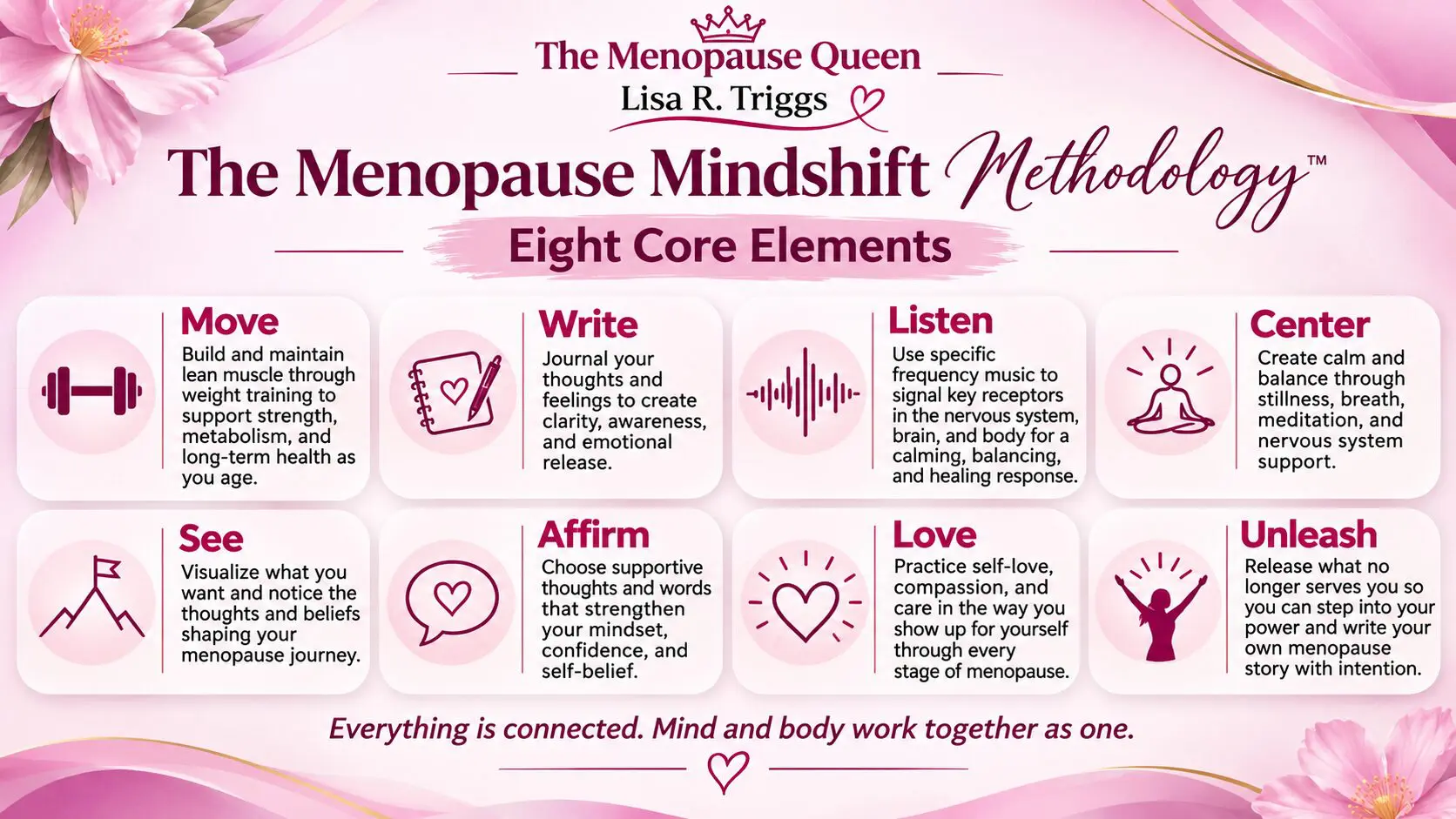
Putting The Menopause Mindshift Methodology Into Action
Understanding your menopause body is the first step toward making meaningful changes in how you manage your symptoms. The Menopause Mindshift Methodology encourages you to become more aware of how your thoughts, emotions, lifestyle choices, and physical health influence one another.
By incorporating the eight core elements into your daily life, you begin recognizing patterns, identifying what supports your well-being, and making conscious choices that help you respond more effectively to the changes happening in your body.
As you develop these habits, you create opportunities to better manage stress, support your emotional and physical health, improve your overall well-being, and feel more confident navigating your menopause journey.
The Menopause Mindshift Methodology is about taking an active role in your health, making choices that support your individual needs, and creating lasting changes in how you live your life.
Because when you begin supporting your mind and body together, you empower yourself to manage your menopause symptoms rather than allowing your symptoms to manage you.

WRITE YOUR OWN MENOPAUSE STORY
Welcome, beautiful soul. You are not alone.
Menopause is not the end of who you are. It is the beginning of who you are becoming. I have walked this road for nearly two decades and what I discovered was that I always had it within me to rewrite my story. I always have a choice of how I want my journey to be..
This guide is your starting point. Inside, you will find the tools to reconnect with yourself, honour your journey, and rise into the powerful Queen you have always been.
Your transformation starts now. And I am honoured to walk beside you.
DOWNLOAD IT NOW FOR FREE
Menopause is more than just a physical transition. It is a deeply personal journey that can impact every part of your life. From fluctuating hormones to emotional highs and lows, many women find themselves feeling overwhelmed, disconnected, exhausted, and unsure of who they have become.
But it does not have to stay that way.
The Self-Care Guide to Unleashing Your Inner Queen was created to help you support your emotional well-being, reduce stress, and reconnect with yourself through simple, intentional daily practices. Using science-based mindset tools, self-care strategies, and the power of self-love, this guide will help you begin shifting the way you think about menopause and the way you support yourself through it.
Inside, you will discover practical tools to help you build resilience, strength, and confidence while creating more emotional balance in your life. These are not just feel-good practices. They are powerful tools that can help rewire thought patterns, calm the nervous system, and support a healthier, more empowered menopause journey.
Through The Menopause Mindshift, Lisa R. Triggs shares the practices that helped her transform her own life and improve her symptoms by thinking differently about menopause. This guide is an invitation to stop merely surviving menopause and start defining your own story with more strength, self-love, and intention.
You are evolving into a wiser, stronger, more radiant version of yourself. And your inner Queen has been there all along, waiting for you to unleash her.

How to Improve Menopause in Just 15 minutes
5 THINGS YOU CAN DO A DAY IN 15 MINUTES:
15 minutes a day is all you need to start feeling better during menopause. Carve out 15 minutes for yourself before you go to bed each night to do one of the following.
1. Listen to Calming Music
Listening to Sofeggio Frequencies is a great way to unwind from the day and get ready for a restful night's sleep. There are many calming, relaxing, destressing and sleep induced frequencies to choose from.
2. Read Something Positive or Inspirational
It's been scientifically proven that going to bed thinking good thoughts helps you sleep better and wake in a better mood. Try reading something that you find uplifting before bed.
3. Journal
Write down your thoughts of the day and get them off your mind before you go to sleep. If the day didn't go the way you wanted, write down how you would have liked it to go. If the day went well, be grateful for it.
4. Meditate
Taking a few minutes to quiet your mind at night can be just what your body needs before sleep. Meditation calms the body, which lowers stress and cortisol levels and in turn can aid in weight loss during menopause.
5. Cuddle With Your Partner
Feeling loved is one of the best ways to end the day off on a good note. Hold your partner and enjoy a few moments of peace together before you nod off to sleep.
MY EXPERTISE
My MENOPAUSE SYMPTOMS
33 MENOPAUSE SYMPTOMS I SUFFERED FROM
