
Communicating Your Needs in a Relationship During Midlife
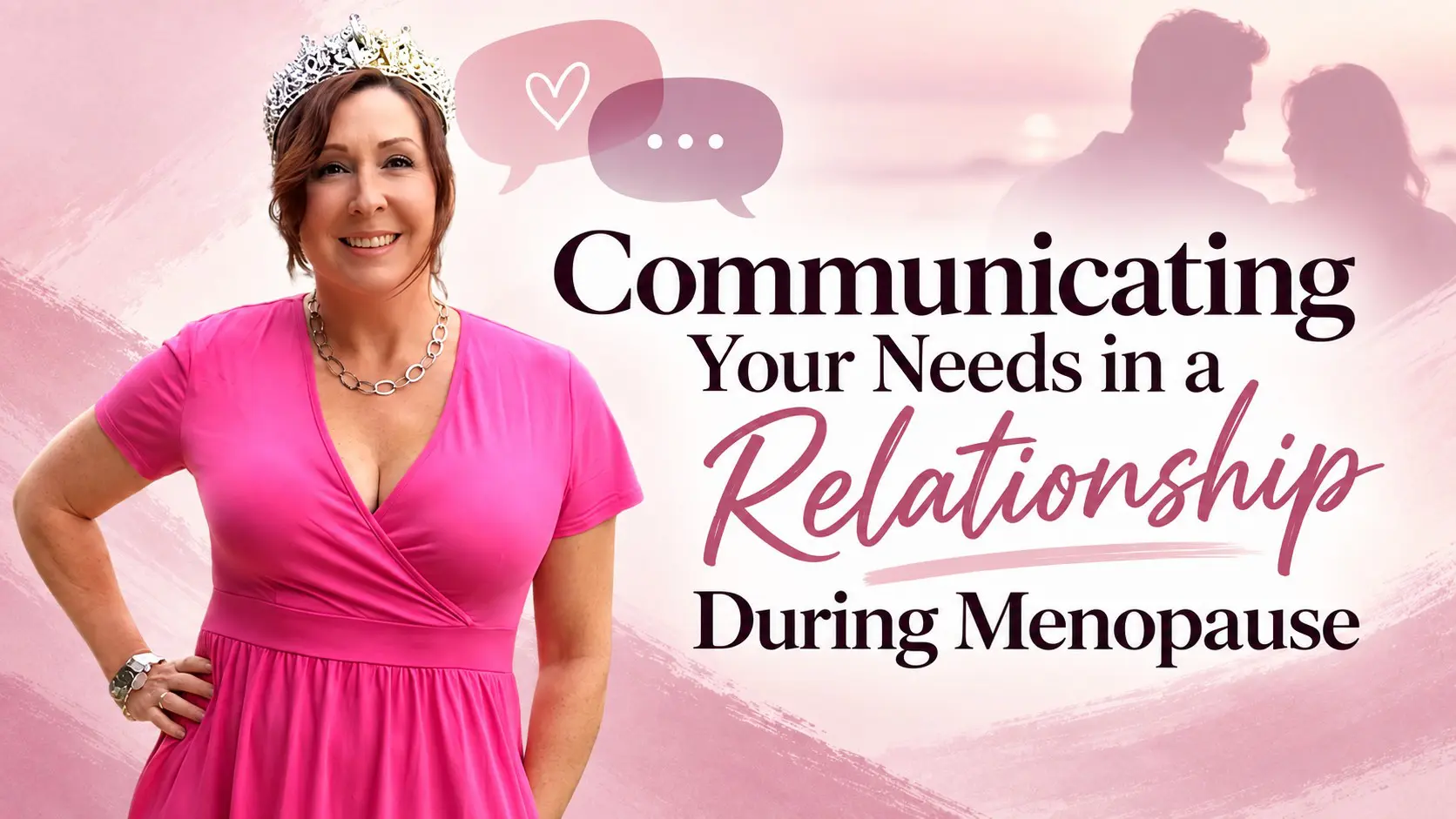
Communicating your needs in a relationship can feel uncomfortable, especially during menopause. Your body may be changing. Your emotions may feel closer to the surface. Meanwhile, your partner might not understand what you’re experiencing or how to support you.
You may need patience, affection, practical help, space, reassurance, or someone who’ll listen without trying to solve everything. Yet many women have spent years noticing everyone else’s needs before their own. When midlife arrives, they may struggle to explain what they need because they haven’t often stopped to ask themselves.
Menopause can bring physical, cognitive, and emotional symptoms that affect daily life. Mood changes, anxiety, sleep problems, and brain fog are common experiences. Those changes can affect your patience, confidence, energy, and communication.
Your partner may see the reactions without understanding what sits underneath them. As a result, both people can feel confused, defensive, or disconnected. Honest communication can create greater understanding, but it begins with becoming honest with yourself.
Why menopause can make relationship communication harder
Relationships move through seasons, and menopause can create a demanding one. You may already be balancing family, work, aging parents, financial pressure, health changes, and shifting plans. Menopause symptoms can add another layer to an already full life.
Poor sleep can leave you exhausted and less patient. Brain fog can make it harder to find the right words. Mood changes may affect how you respond in a tense moment. Hot flashes or night sweats can disrupt rest, intimacy, and confidence.
Stress can come from several places at once. Mood changes during menopause may be affected by stress, family changes, or exhaustion. So, it helps to look at your whole life instead of treating each challenge as separate.
Your partner may be dealing with personal pressures too. But understanding their situation doesn’t mean ignoring your own needs. Both experiences can be real at the same time.
During one difficult period in my marriage, my husband was taking medication for a pituitary tumour. The medication affected him in many ways, including his ability to listen and understand me. At the same time, I was deeply depressed and navigating intense menopause symptoms.
Communication became difficult for both of us. I felt unheard, unsupported, unappreciated, and unloved. Still, my inner transformation helped me see my own role more clearly.
I’d been approaching many parts of my life negatively. Sometimes, I passed blame instead of taking responsibility for my words, actions, and reactions. That realization didn’t make his part disappear. Instead, it showed me where I had influence and where I could begin.
Before communicating your needs in a relationship
Start by identifying what you truly need. Feeling upset tells you something matters, but it doesn’t always explain what’s missing. Before beginning the conversation, give yourself time to listen to yourself.
You might need your partner to listen without interrupting. Maybe you need more help at home, more affection, or greater patience. You may need time alone, clearer boundaries, or support while seeking health care.
Writing can help you move from a general feeling to a clear request. Ask yourself, “What happened? How did it affect me? What would help me feel supported now?” Your answers can prevent several frustrations from spilling into one conversation.
Next, consider the timing. A serious conversation may not go well when either person is tired, distracted, or already defensive. Choose a calmer moment whenever possible. Let your partner know that the conversation matters to you.
Your intention matters too. Decide whether you want understanding, a solution, a boundary, or a specific change. Sometimes, you may need more than one conversation. A pattern built over many years rarely changes after one discussion.
Most importantly, ask yourself whether you feel safe speaking honestly. Disagreement and discomfort can happen in healthy relationships. Fear, intimidation, control, or abuse need a different response. Your safety and well-being must come first.
If you feel unsafe, contact a trusted professional or a local support service. Communication strategies can’t turn an unsafe relationship into a healthy one. You deserve support while deciding what’s right for you.
Self-love changes the way you communicate
I needed to feel heard, understood, supported, appreciated, and loved. But I eventually understood that I had to learn how to love myself first. How I felt about myself was affecting every area of my life.
Self-love helped me recognize that my needs mattered. It also helped me understand the way I wanted to be treated. As my relationship with myself changed, I became less afraid to say what I needed.
I learned to set boundaries, which I’d never understood how to do before. Then, I became calmer and more direct. I paid closer attention to my thoughts, words, tone, and actions.
Interestingly, becoming more direct didn’t make me harsher. I became kinder in the way I expressed difficult truths. Because I valued myself differently, I no longer needed every conversation to begin with blame.
Self-love doesn’t mean believing you’re always right. It asks you to look honestly at your own behaviour while respecting your needs. That balance allows responsibility and compassion to exist together.
This understanding became part of the Menopause Mindshift Methodology. Its eight core elements are Move, Write, Unleash, Listen, Center, See, Affirm, and Love. These elements grew from the practices I used to change my own life.
Writing helped me examine my thoughts. Centering helped lower the stress I was carrying. Movement helped me feel stronger in my body. Affirming supportive messages helped me engage with my body differently.
Above all, Love influenced every other element. It changed how I treated myself and how I approached other people. Over time, that inner change became visible in my marriage.
Communicating your needs without blame
Clear communication gives your partner something they can understand and respond to. Blame often creates defensiveness before your real need has been heard. So, focus on your experience, your need, and the change you’re asking for.
For example, “You never listen to me” may close the conversation quickly. Try saying, “I need ten minutes to explain how I’m feeling. Can you listen without interrupting?” The second version gives your partner a clear way to support you.
Specific requests are usually easier to understand than broad statements. “I need more support” may mean many different things. Instead, explain what support looks like today.
You could ask your partner to handle dinner, attend an appointment, or give you quiet time. Maybe you want a hug, a walk together, or reassurance that you’re facing this as a team.
Three practices helped me communicate more clearly.
First, work on your relationship with yourself. When you operate from self-love, you can identify your needs without apologizing for having them. You can also take responsibility without carrying all the blame.
Second, become aware of how you speak. Notice your words, volume, timing, facial expression, and tone. Your message may be reasonable, but an angry delivery can make it difficult to receive.
Finally, think about how you’d like someone to speak to you. Bring that same care into the conversation. Kindness and directness can exist in the same sentence.
Listening matters as much as speaking. After expressing your need, allow your partner to respond. Their answer may reveal confusion, concern, willingness, resistance, or needs they haven’t expressed either.
Still, listening doesn’t require you to surrender your boundary. You can understand another person’s perspective while remaining clear about what you need. Healthy communication makes room for both people.
When communication stays difficult
Some conversations remain difficult even when you choose your words carefully. Your partner may need time to understand what’s changed. They might feel helpless because they can’t remove your symptoms. Sometimes, they may not recognize how their behaviour affects you.
Keep communicating when the relationship feels safe and both people want to work on it. A counsellor can help when the same conversation keeps going in circles. That support may help you both understand patterns that have built up over time.
At the same time, look at the relationship honestly. One person can’t carry the full responsibility for repairing a partnership. Both people need to decide whether they’re willing to take part.
My husband and I both valued our marriage and our family. We shared a deep bond and truly enjoyed each other’s company. Even during a difficult period, we both chose to keep working on our relationship.
As I changed, my husband noticed. He saw those changes as positive, and he wanted to become part of them. Over time, we became more patient and understanding with each other. Our relationship deepened because we were both willing to grow.
Every relationship requires ongoing attention. Complacency can create distance, especially during seasons of major change. Shared laughter, quiet companionship, affection, and honest conversations all help maintain connection.
Still, staying is a personal decision. Loving yourself may lead you to rebuild a relationship. It may also help you recognize when a relationship no longer supports your well-being.
No blog can make that decision for you. But honest reflection can help you see your situation more clearly. Trusted counselling or support can help you figure out your next steps.
Managing relationship stress and menopause from a place of love
Relationship stress can affect how you experience an already challenging day. In my life, that extra stress magnified my menopause symptoms. Reducing it helped me manage my responses and feel less controlled by what I was experiencing.
Meditation and centering helped me lower the stress I carried in my body. I learned to work with my mindset and speak to my body with greater care. Instead of treating my body like an enemy, I began telling it that it was working for me.
Movement made a difference too. Before that, I relied heavily on cardio. Later, I added more weight training because I wanted to stay strong.
Within a short time, I noticed changes in my cognitive function and sugar cravings. I also felt stronger in my body. These were my personal results, and every woman’s health needs are different.
The Menopause Mindshift Methodology grew from this transformation. I was learning how my thoughts, words, actions, stress, food, and movement affected me. Because of that, I began making choices that supported my mind, body, and spirit together.
Managing your symptoms doesn’t mean blaming yourself for having them. Menopause involves real hormonal and physical changes. Medical care, counselling, lifestyle support, and personal practices can all have a place.
For me, the goal was to manage my menopause symptoms so they didn’t manage me. That included lowering my stress, changing my inner dialogue, strengthening my body, and communicating differently.
When I approached my husband from a calmer and kinder place, he could understand me more clearly. When he understood, he could respond differently. In turn, greater patience lowered some of the strain we had both been carrying.
Begin with one honest question: “What do I need right now?” Then listen carefully to your answer. From there, choose one clear and loving way to express it.
Communicating your needs is an act of self-love. It gives your partner an opportunity to understand you. It also gives you the opportunity to hear and honour yourself.
When we operate from a place of self-love, it influences how we think, speak, act, and treat others. It changes how we treat ourselves too.
The universe responds to the energy we bring forward. When we operate from a place of love, love is what we receive.
Reader note: This article shares personal experience and general education. It isn’t medical, mental health, or relationship advice.